
It’s no lie that going abroad can cost a lot of money. I will never follow the belief of social media influencers that say it is cheap and it’s easy etc. Yes it can be pretty cheap depending on where you go and what you get up to but this is not always the case. One of our biggest dreams is to be able to travel full time in a van but that requires an online income (for example, social media marketing, tutoring online, investments, customer service provider etc), it requires being a bit more financially stable and as it turns out, it requires being 25 which I am not yet there. You have to be 25 to insure a van so we will have to wait another year or so as Dave doesn’t yet have his driving license. Anyways, back to the finances, travelling on a budget is always possible but it’s not the easiest thing in the world. So here is some tips and tricks that we use to help us stay financially stable but still able to travel as much as possible.

- The most important thing in my opinion when it comes to travelling is budgeting and planning. We try and book our bigger holidays in advance. So for example, we went to Slovakia in November last year and we went to Czechia, Hungary and Austria whilst we were there. We went to all the different Christmas markets which was amazing. But we started planning and budgeting for that trip whilst we were on the flight home from Paris in the August. This meant that we were able to plan what we wanted to do, find some decent accommodation that wasn’t too expensive and we had time to work out how much we needed to save up to be able to go. We decided back in March that we would go to Morocco this year, decided on dates and have been saving for it, preparing for it and researching it since then. I have a full powerpoint set up of where we’re going and what we’re doing. I worked out a budget very early on so that we had a goal that we were working towards financially. I recommend doing this so much as it really does help. You don’t have to have your entire trip booked, if you like spontaneity, just make sure that you have an idea of some hotels and how much they cost on average, research the area and just check to see if there is anything you’re interested in doing as some things require booking quite far in advance and you don’t want to miss out. For Dave and I, we have our accommodation booked and we have a few things lined up that we would like to do but as far as things like food and just day to day stuff, we like to walk around the city or the area and just see what we find. Planning and budgeting in advance, even just loosely, saves you stressing about money whilst you’re there.
- The cheaper the better, but go with what works for you. For example, so many solo travellers recommend using hostels. I used one once when me and my friend were in Hvar, Croatia and we hated it. I couldn’t sleep the whole time I was there, people were snoring, there was some people that were just not very nice, I didn’t like having a shared kitchen because people were stealing our food. I know every place is different but so are people and for me, hostels just aren’t it. Maybe if I was solo travelling and I could have my own room then I’d probably be alright but now I have Dave, we will most likely stick with hotels or Air BnB’s as it means we have more privacy and more comfort. But since we like to walk and explore, we are the type of people that, if something is far away (within reason), we will walk rather than get a taxi. We use public transport in most foreign countries when necessary, we very rarely use taxis. I think the only time we have used taxis abroad since being together is just to get from airports to our accommodation or to get to and from Moulin Rouge when we were in Paris as it was pretty late when it finished. There are other ways to save money as well, try local food rather than Western chains as the local food is usually much cheaper. The same goes for clothes as well, wander around some markets or go to some local shops if you want to get some clothes instead of Western chains like H&M or Zara. Get lost, wander the city or the town that you’re in and see what you can find. It’s fine to do the tourist stuff as well but sometimes it’s so nice just to get lost and see where you end up. Those days also tend to be the days where you spend the least amount of money and find some really interesting things.
- This kind of reiterates
 what I said in my first point but do your research! If there is somewhere specific that you want to go, find out when the off-season is, check if there’s any major events going on at the time you’re looking to go, this can save you a fortune. To go to somewhere like Disney world when the children are on a school break is significantly more expensive due to the higher demand. Same as if you wanted to go somewhere when there is a major sports event on or fashion week if you’re looking to go to New York or Paris etc. Another way to save money through research is looking at different airlines. You can use apps like skyscanner, it’s brilliant at helping you find the best prices but I also find that just looking at the airline websites directly can also work out quite well. But you can find different times of the day, maybe even cheaper to fly the night before instead of the day you were planning on leaving. It really does help to look into all these things before leaving. Even if you have only decided on the trip 3 days before you’re due to leave, researching the area and the flights and everything can really help. This is something that Dave and I learnt the hard way. Whilst we were in Slovakia, we thought we would do a train journey over to Gyor in Hungary and we did not do our research about Hungary at all. We knew nothing and ended up stranded in some random little village in Hungary because all the trains were on strike once you got as far as this little village and the trains back to Bratislava were only going every 2-ish hours!
 - Frugality. We live a pretty basic life at home in order to be able to afford all our trips and adventures that we go on. For example, we only allow ourselves 1-2 takeaways a month. We meal plan every week and shop from the cheaper supermarkets such as Lidl to save money, we don’t have Sky Tv, we very rarely spend money on things for our flat, we work with what we have got. We live in a small, cheap, one bedroom flat. It is big enough for the 2 of us but it has some things we would rather not have, such as triangular rooms, and it hasn’t got some things we would like such as a driveway. But we make it work. As well as this, I drive an old Fiat 500 and honestly don’t plan on replacing her any time soon. We live pretty frugally in terms of material items, neither of us have been shopping for clothes in months and we only buy things for ourselves such as shower or skincare products when we are running very low on our current one. That being said, we are by no means frugal when we go out. We regularly go to new places in the county where we live, we go to our closest city quite regularly, mainly for days out such as cinema, bowling trips or dinner dates. We know these things are important to us and so we save on material things so we can spend on trips or days out. I recommend sitting down with your partner (or by yourself if you haven’t found your travel partner yet) and write a list of what is important to you. Would you rather spend a day at the cinema or at mini golf or would you rather go on a shopping trip and buy some new clothes and things for your home? Which ever you prefer, but you have to then make sacrifices. If you want to spend money on new clothes then you won’t be going to watch the new Devil wears Prada 2 at the cinema because you’ve already saved that money for your next trip away. We keep this mentalit
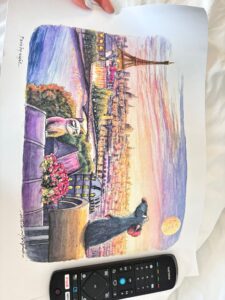 y when we go away as well, for example, we always try and get a kitchen in our room so that we can save money by cooking in the hotel some nights. We also don’t buy souvenirs. Not for us and not for our loved ones (except we did buy them presents from the Christmas markets last year). I think this can be a bit of a controversial point because some people always say that they get their loved ones something from everywhere they go but for us, we would rather save our money for things like nice meals out, maybe a day trip somewhere else, just whatever we enjoy doing and our family prefer us to spend our money on those things as well, they don’t get us anything when they comeback either. It’s an agreement we all have. Second of all, it’s not always easy when you’re travelling with very little luggage allowances to be able to bring back souvenirs as you might not have space. The only souvenir we have ever bought for ourselves abroad is this picture of Remy the rat from Ratatouille. We bought him from a street vendor outside the Eiffel Tower the day we got engaged (not that I knew that at the time!) If you like to keep memories then I recommend buying a scrapbook and keeping your tickets, receipts, pictures and even drink coasters from your time away and putting those into a scrapbook for you to look back on. It’s something that won’t break and you won’t have to struggle to find room for it in your luggage. Just add to it when you get back.
 - Something we have learned as well is to be vocal about where you’re going. In the past, I have been to countries and got accommodation either for free or for seriously reduced prices because I have been talking to people about where we’re planning on going and then someone goes “oh I have a place out there.” Or “I know someone that has a place out there.” Before Dave and I got together, my family got a 2-week trip to Spain over Christmas and only spent around £100-£150 on accommodation for the entire 2 weeks for 5 people. How? My dad was telling the men that he works with what we were planning to do and one of them happened to have a Spanish girlfriend who not only had a flat in the city centre of Seville, but her mother also owned a house on the beach front near the Portuguese border. Both of them were in England for Christmas and so they kindly let us stay there for very very cheap prices. Dave and I also had the offer to stay in Morocco for very cheap prices as well because of a similar situation. We were talking about our trip to Morocco whilst at a pub, when a regular came up to me and said that he had an old friend that has a flat out in Morocco and we are welcome to stay there if we wanted to. Unfortunately, by the time we found this out, we had already paid for all of our accommodation out there so this one didn’t work out for us but if we decide to ever go back, we will be reaching out to this person again. I’m not talking about shouting about it in a bar and hoping someone comes up and offers you a place to stay, that was never our intention, we were just there in a particularly quiet time and us and this regular were the only people there so they heard our conversation. But even just talking to your work colleagues about it, or when you’re catching up with an old friend and they ask if you’re planning any holidays this year, fill them in. It could save you a lot of money in the long term.
- Have an emergency fund! – keep some money to one side that you do not spend on holidays. A lot of people say to save around 3-6 months of essential expenditures. For a lot of people, this is between £10,000 – £15,000. Now if you travel full time then your expenditure is going to be much lower but I would recommend still having some sort of savings even if its just £5,000, in a separate bank account saved only for emergencies. This is so beneficial, even more so for people that travel a lot in my opinion, as this means that if you are ever in a situation abroad where you feel unsafe, such as if you have arrived at your accommodation and it is completely different to what they said it was going to be (has happened to me before) or you just don’t feel safe in the country you’re in, you need to get home for a medical emergency or whatever it may be, you have that added money there as a fall back if you need it. That way you don’t need to worry about factoring in emergency funds every time you go on a trip away. I’m not saying to save this much before you ever go away because for some people that’s just not possible and whats the point of waiting? Dave and I certainly don’t have that much saved up but we are working on building up savings for this particular reason and whenever we do go away, we make sure that we have got some extra money stored in a separate bank account just in case.
These are my top 6 tips for saving and travelling on a budget, I really hope this helped some people, or at least one person. Thank you for reading my first blog post, hope you enjoyed it, if you did then come back next Sunday for the next one. Bye x